7 Up 7 Down
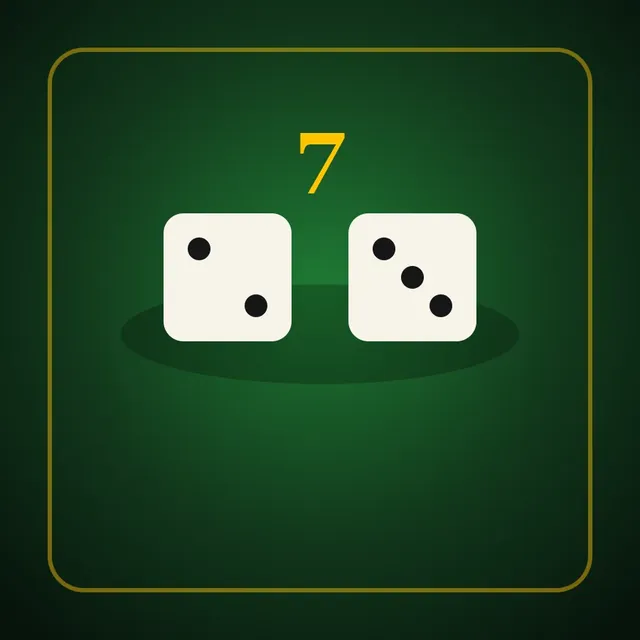
Two dice make 36 totals, and they are not equally common. 7 Down is 2 through 6, and that band has 15 ways. 7 Up is 8 through 12, also 15 ways. A total of 7 has 6 ways. The middle looks rare because it is rarer than either side, and the two sides match each other.
This is a dice table people already know from a house game. The practice roll just makes the count visible.
Dice Bets
- 7 Down pays even money. A win returns the stake and the same again.
- 7 Up pays the same even money.
- A total of 7 pays 4 to 1, so a winning stake comes back as 5 times the stake.
- One button per roll. The stake is not split.
15 ways out of 36 on an even-money side is a house price. So is 6 ways out of 36 paid at 4 to 1. A fair 7 would pay more. This table doesn't.
7 Up 7 Down Demo
Pick a side, set a stake from ₹10 to ₹5,000, and roll. The page draws each die from 1 to 6. A miss keeps the stake. A hit writes the return into the practice balance. Nothing is paid to a bank.
Lucky 7
The 7 button is the one people tap because 4 to 1 looks kind. It hits 6 times in 36. Across a long sitting that price returns less than the stake you put through it. A run of side bets that miss doesn't make the next 7 due. The dice don't keep a debt.
If you came from a cash pit, read that room's payout before you assume it matches this one. Some tables shave the 7 further, or pay the sides differently. This page is even money on the sides and 4 to 1 on the 7.
Two dice, 36 ways
| Button | Hit | Miss |
|---|---|---|
| 7 Up / 7 Down | Even money | The other totals |
| Seven | 4:1, stake back as 5× | Anything but 7 |
7 Up 7 Down FAQ
Are 7 Up and 7 Down the same price?
Yes on this table. Each side has 15 ways out of 36, and each pays even money.
How often is the total exactly 7?
6 ways out of 36. The practice table pays that at 4 to 1.
Can I withdraw a winning roll?
No. The return is demo credit.