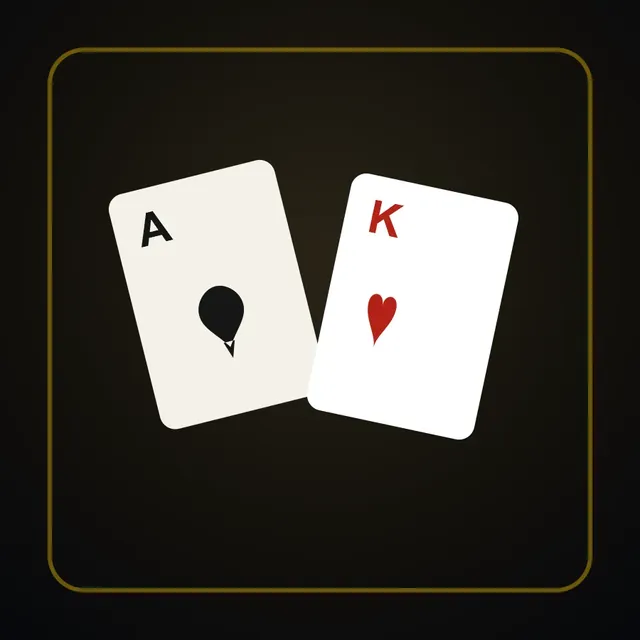
Hi-Lo Card Game
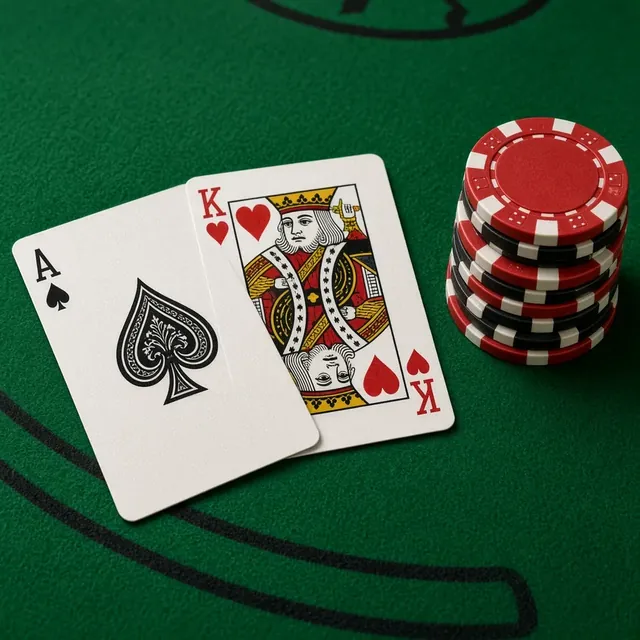
Each hand starts from a full deck. The face card comes off, and the next card is one of the other 51. A king has a lot of cards under it and only the aces above it. A 7 sits nearer the middle. The guess is easy to feel and uneven to price.
Same rank returns the stake. Suits don't matter. Ace is high, so an ace has no higher card and a two has no lower card. The button already counted the rest.
Hi-Lo Rules
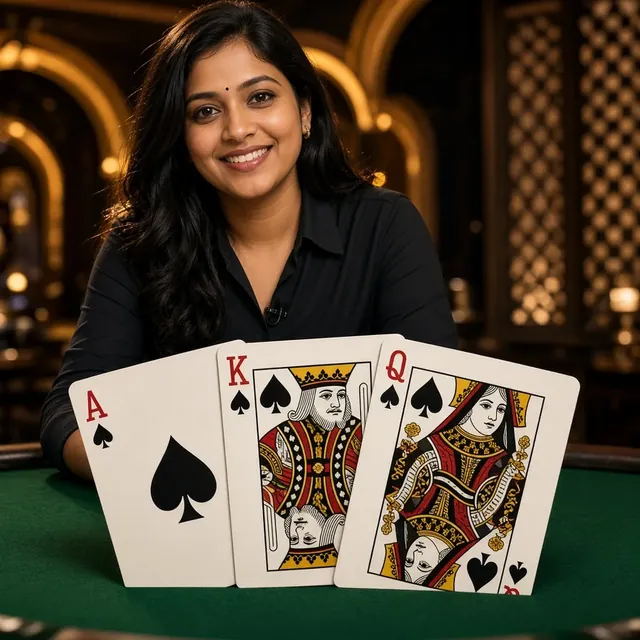
- Ace is the highest card. King is next. Two is the lowest.
- Same rank is a push. The stake comes back.
- A winning side pays the multiple printed on that button, stake included.
- The multiple is 97% of the fair return for the cards that can still go that way.
A flat even-money button would be a gift on a king and a bad joke on a seven. This table changes the price with the card, then keeps a small margin.
Hi-Lo Demo
The face card is already up, with Higher and Lower priced for that card. If a side has no cards left, that button stays off. An ace has no higher card. A two has no lower card. Stake ₹10 to ₹5,000 in demo rupees. The last hand stays on the table so you can see what just happened.
Hi-Lo in India
Hi-Lo shows up as a side table and as a habit inside other games. The useful part here is the price moving when the card changes. If you still press Higher on a king because the word sounds lucky, the multiple will be large and the hit will be the four aces. If you press Lower on that same king, the multiple shrinks because most of the deck is already under it.
The return stays in the browser. It doesn't settle to UPI.
Hi-Lo on this page
| Item | Here |
|---|---|
| Ace | High |
| Same rank | Stake back |
| Price | 97% of a fair multiple on the remaining 51 cards |
| Deck | Fresh pack each round |
- The printed multiple already shaves a little off a fair price.
- A card that cannot go higher is not a reason to bump the stake.
Hi-Lo FAQ
Is ace high or low?
Ace is high on this table. A two is the lowest card.
What happens if the next card matches the rank?
The stake comes back. Same rank is a push.
Why does the price change every hand?
It follows how many of the other 51 cards go that way, with a small margin kept by the table.